

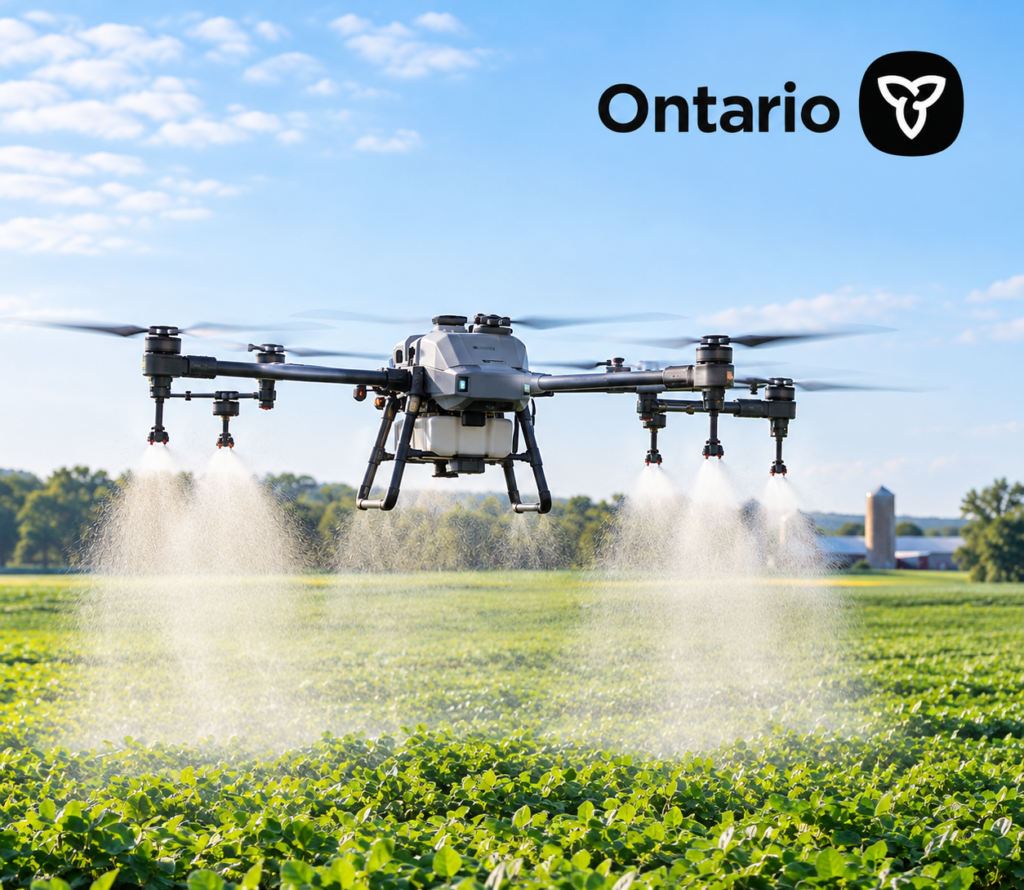
The Ontario Ministry of the Environment, Conservation and Parks (MECP) has proposed amendments to Ontario’s pesticide regulations that would establish a regulatory pathway for applying pesticides using remotely piloted aircraft systems (RPAS), commonly known as agricultural spray drones.
The proposal aims to give Ontario farmers and pesticide application businesses greater access to drone technology while maintaining requirements for the safe and responsible use of pesticides.
What Is Ontario Proposing?
The proposed amendments to Ontario Regulation 63/09 under the Pesticides Act include two key changes:
A new licence for commercial pesticide applicators
A drone-specific pesticide application licence and training program would allow licensed exterminators to offer drone-based pesticide application services without requiring the same aerial training used for conventional aircraft.
A pathway for farmers to use spray drones
Farmers who are already certified to apply pesticides on their own agricultural operations would be able to use drones following completion of approved, drone-specific training. Under the proposal, these farmers would not need a separate pesticide application licence for drone use, provided they meet the applicable conditions.
What Does This Mean for Agricultural Drone Operators?
If adopted, the proposed changes could create new opportunities for agricultural drone spraying in Ontario, giving farmers another tool for crop protection and allowing custom application businesses to expand their services.
Agricultural drones can offer flexibility for targeted applications and treating areas that may be difficult to access with conventional equipment. The ministry identifies potential benefits including improved application efficiency, lower operating costs and reduced pesticide use.
Drone pesticide applications would still need to comply with applicable Health Canada pesticide requirements and Transport Canada drone operating rules. Only pesticides authorized for the relevant application may be used.
What Are the Current Rules?
The proposal is not yet an approved regulatory change. Ontario is accepting public comments before deciding whether to finalize the amendments.
According to the ministry, holders of existing aerial exterminator licences may apply pesticides by drone during the interim period, subject to applicable requirements. Until the proposed farmer pathway and training are implemented, farmers would need to obtain an appropriate aerial exterminator licence or hire a licensed exterminator to conduct drone pesticide applications.
The ministry indicates that regulatory amendments could be finalized by spring 2027, following consideration of public feedback. The new drone-specific licensing and training programs could take up to two years to develop and implement.
Public Consultation Open Until December 11, 2026
Farmers, agricultural service providers, drone operators and other interested stakeholders can review the proposal and submit comments through the Environmental Registry of Ontario.
Read the official proposal and submit comments:
https://ero.ontario.ca/notice/026-1061
The consultation closes at 11:59 p.m. on December 11, 2026.
DroneSpray Canada will continue to follow developments affecting agricultural drone spraying and the use of drone technology in Canadian agriculture.