

DJI AGRAS T100
Big Drone, Big Jobs.
From $48,505 $45,505 CAD
The T100 Agricultural Drone, a groundbreaking creation twelve years in the making, boasts a maximum payload of 100 kg. Its operational efficiency is doubled, supporting multiple application scenarios, including spraying, spreading, and lifting tasks. Featuring industry-leading safety systems and advanced algorithms, it delivers unparalleled safety performance and an intelligent operational experience.
100 L Spraying Tank, 40 L/min Flow Rate
150 L Spreading Tank
400 kg/min Flow Rate
LiDAR + Penta-Vision System + Millimeter-Wave Radar
20 m/s Max Operation Speed
100 kg Lifting
Ultra-Fast Charging
Spraying System
Efficient operation,
Outstanding performance.
The T100 comes equipped with a 100 L tank and dual atomizing centrifugal sprinklers, enabling faster flight speeds, wider spray coverage, and higher operation efficiency for large-scale field applications. Orchard users can choose an optional mist sprinkler set, which upgrades flow rates and atomization effects to penetrate dense canopies and reach the undersides of leaves on tall, thickly-canopied trees, ensuring outstanding versatility and performance across various agricultural tasks.
Field Operations
36 %
Increase in Operation Efficiency
30 L/min
High Flow Rate
5-13 m
Effective Spray Width
20 m/s
Maximum flight speed
Orchard Operations
40 L/min
Four Sprinklers
25 %
Increase in Effective Spray Width
65 %
Increase in Leaf Underside Coverage
Water-Cooled Mist Sprinkler(Optional)
Fine droplets as small as 50 μm penetrate canopies for comprehensive leaf coverage. A new liquid flow path helps dissipate dual centrifugal motor heat for durability and longevity.
Dual Atomization Centrifugal Sprinkler
New flow channel design, particle size range 50-500 μm, suitable for most operational scenarios.
Magnetic Drive Impeller Pumps
Corrosion-resistant, stable, and reliable, an optimized impeller structure and increased chamber volume meet the high flow demands of orchard scenarios.
Rear Four
Sprinklers Array
It expands the spray width for orchard operations while maintaining uniform coverage. It also minimizes visual interference from mist, enhancing operational reliability and precision.
Dual-Channel Electromagnetic Flow Meter
Real-time precise flow detection and dynamic control ensures high-precision operations. It avoids direct contact with the liquid, preventing corrosion and enhancing durability.
Spreading System
Bigger Loads, Faster Flow,
Better Efficiency
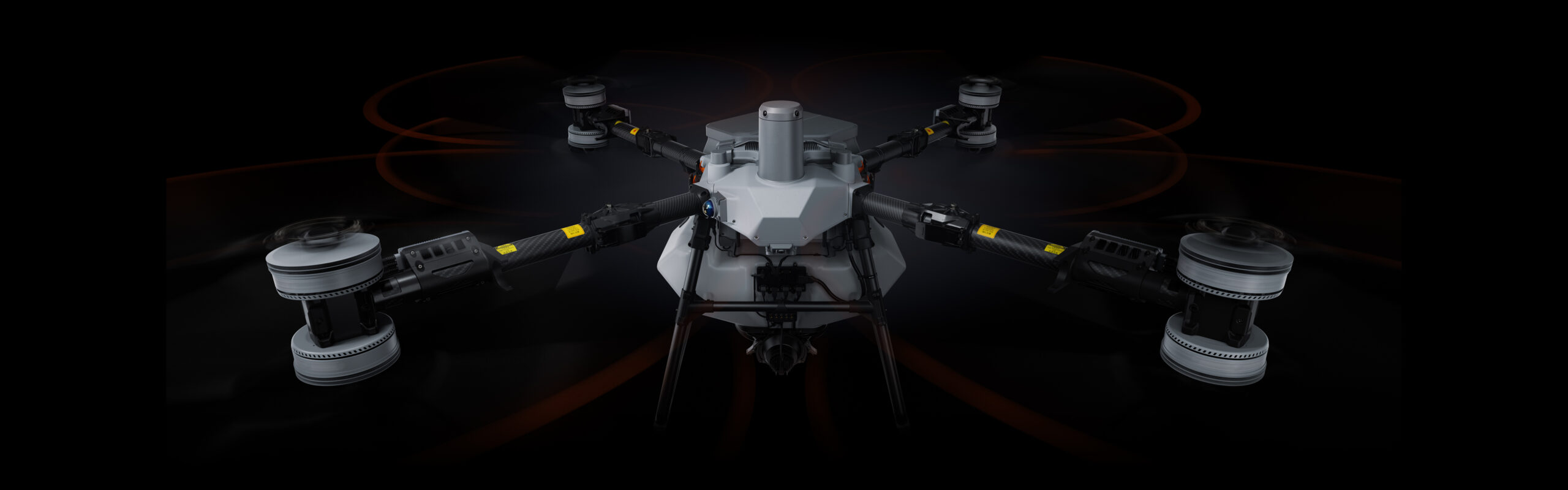
The T100 Spreading System has been fully upgraded, with double the load capacity, and a 270% increase in flow rate. Equipped with a brand-new screw feeder, it is suitable for various granulars and can handle spreading scenarios in large fields, orchards, aquaculture, and more.
150 L(100kg)
High Capacity Spreading Tank
66 %
Increase in Operation Efficiency
400 kg/min
Ultra-High Flow Rate
10 m
Effective Spreading Width
20 m/s
Maximum flight speed
Four Feeder Types
Supports four interchangeable feeder sizes for precise flow and greater adaptability across seeding, fertilizing, and feeding.
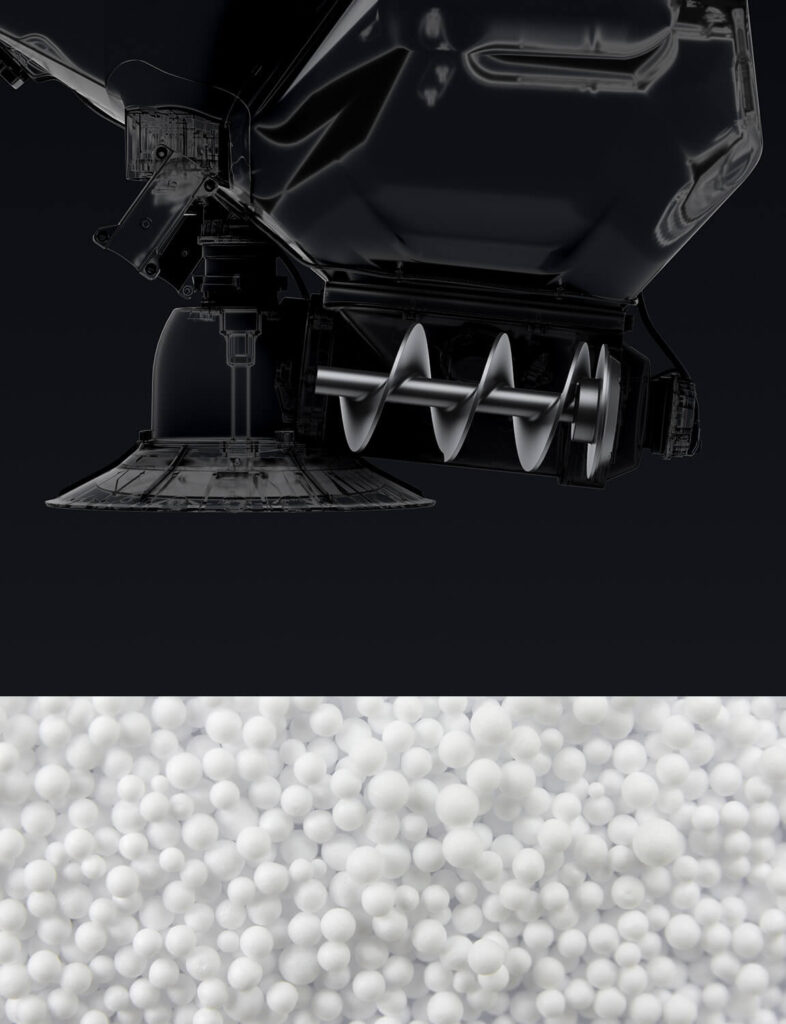
Extra-Large Feeder
Suitable for granulars such as fertilizers, wheat seeds, granular fungicides, feed, etc.
Recommended application rate: 75-750 kg per hectare.
Recommended particle size: 0.5-10 mm
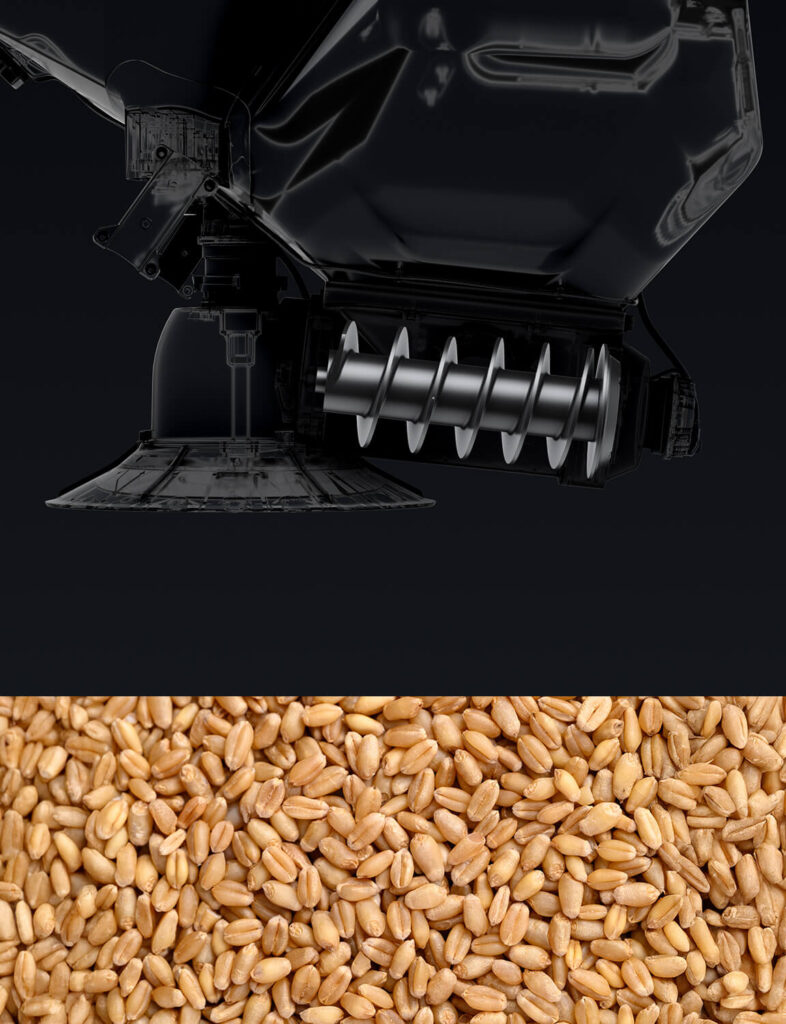
Large Feeder (Optional)
Suitable for granulars such as rice seeds, cover crop seeds, etc.
Recommended application rate: 75-270 kg per hectare.
Recommended particle size: 4-10 mm
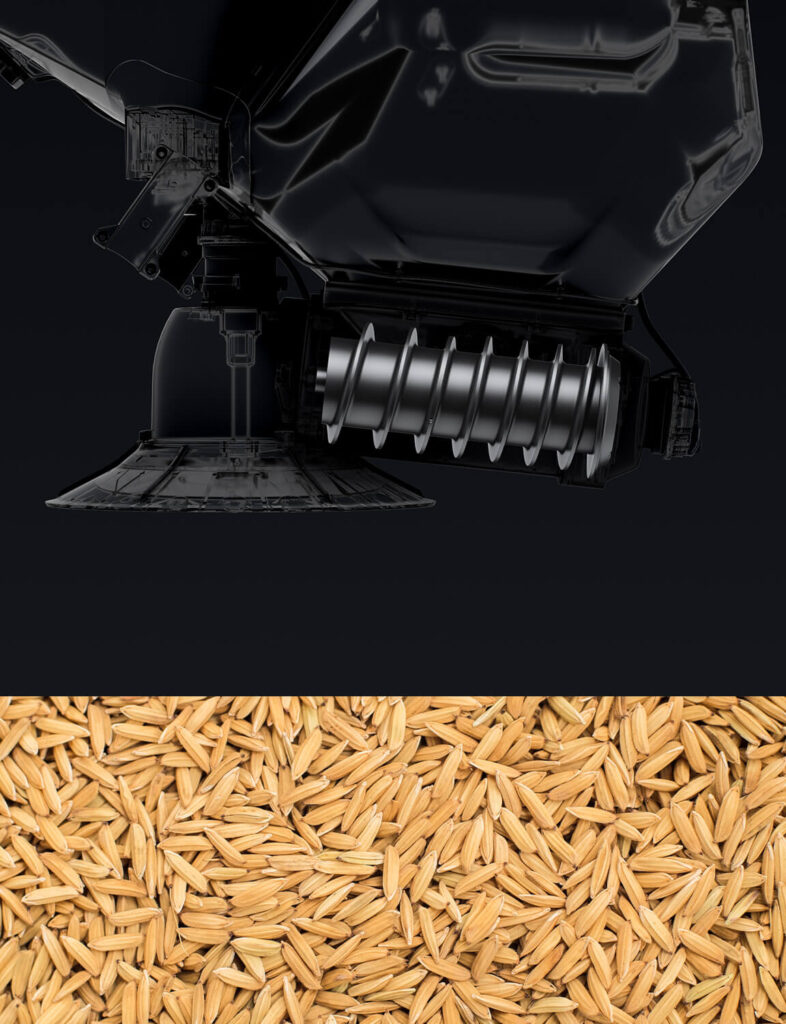
Medium Feeder
Suitable for granulars such as rice seeds.
Recommended application rate: 22.5-120 kg per hectare.
Recommended particle size: 4-6 mm
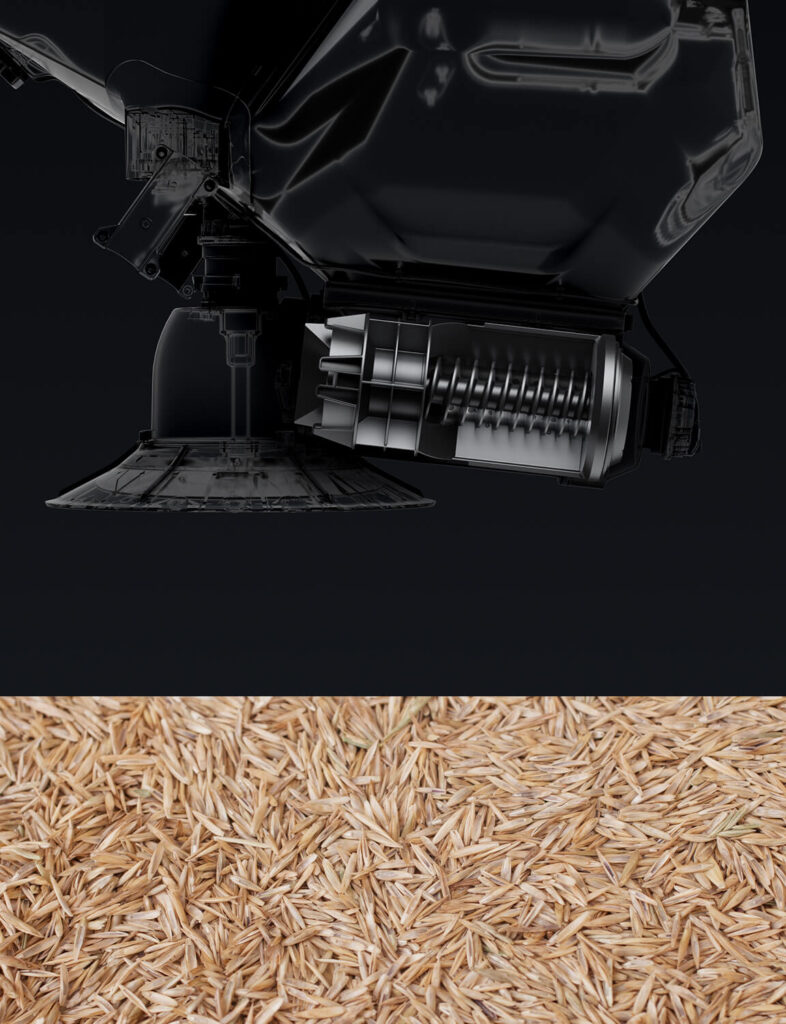
Small Feeder (Optional)
Suitable for granulars such as rapeseed, granular herbicides, grass seeds, granular insecticides, etc.
Recommended application rate: 3-22.5 kg per hectare.
Recommended particle size: 0.5-4 mm.
Safety System
Industry-Leading Safety
System, Safer With Every Flight
Omnidirectional Sensing,
Precise Obstacle Detection
T100 is equipped with advanced technologies, including a new LiDAR, millimeter-wave radar, and a Penta-Vision system. These features enable comprehensive environmental awareness, allowing for precise obstacle detection.

Capable of capturing dense spatial point cloud up to 300,000 points per second, providing a detailed view of complex terrains.
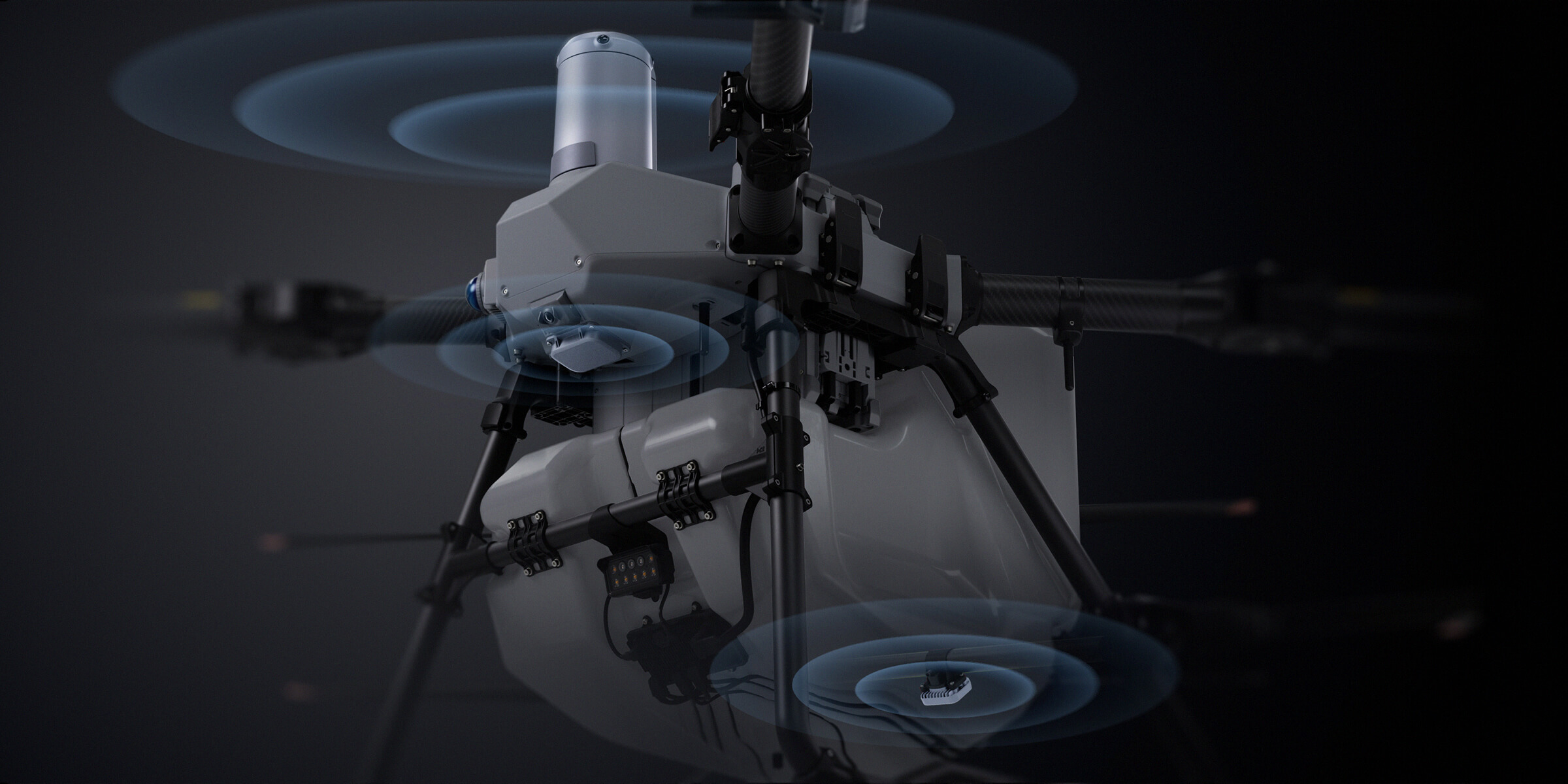
The front radar performs 5,000 vertical airspace scans per second combined with 360° horizontal mechanical rotation scanning, along with a rear radar offering a more comprehensive detection range.
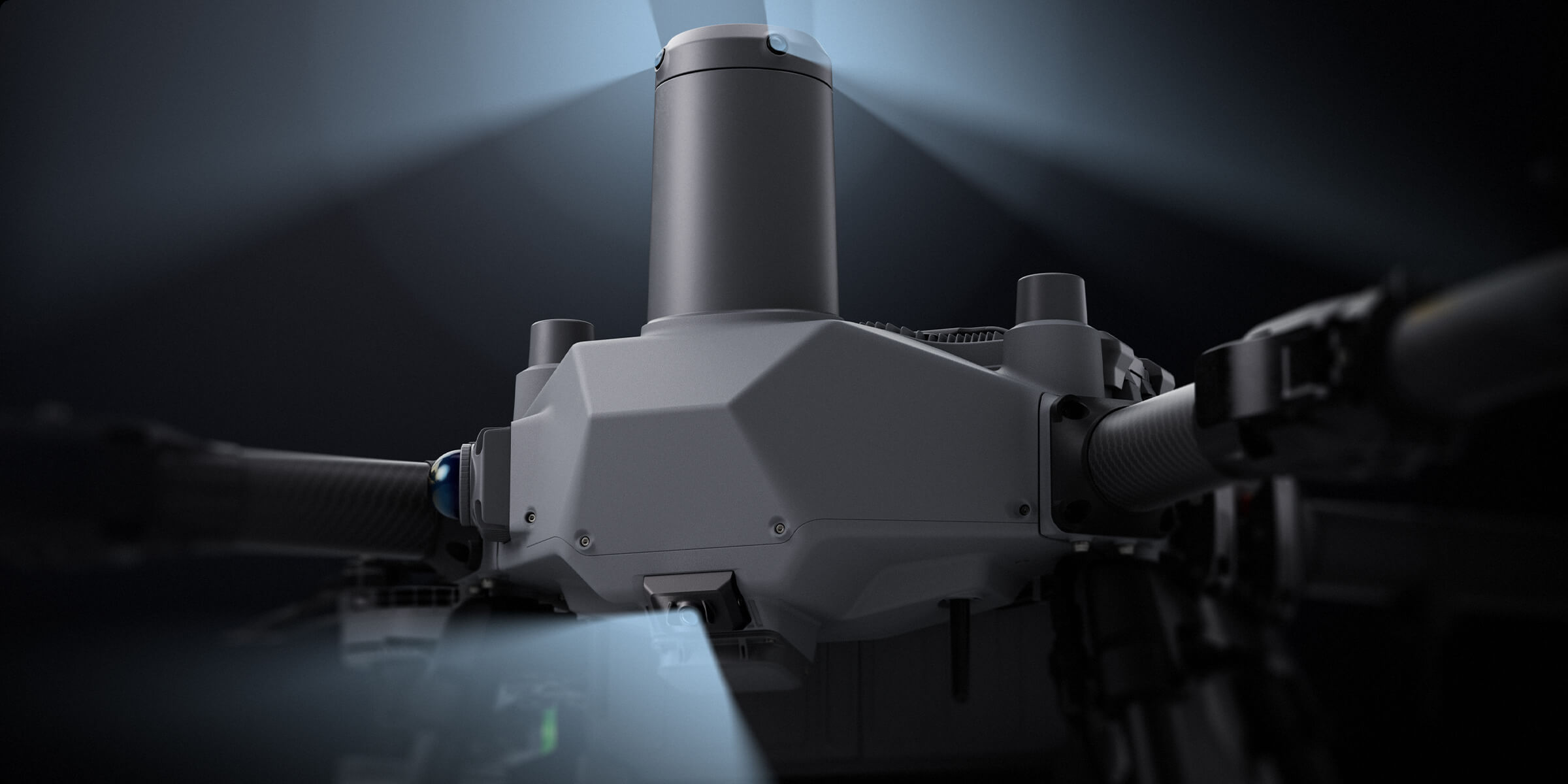
The quad-vision system, paired with an FPV low-light full-color camera, facilitates unrestricted viewing of flight scenes in front, behind, left, right, and below, while intelligently identifying obstacles. The FPV camera employs virtual gimbal technology, offering an ultra-wide field of view complemented by stabilization algorithms, to achieve electronic image stabilization for smoother, more fluid footage.
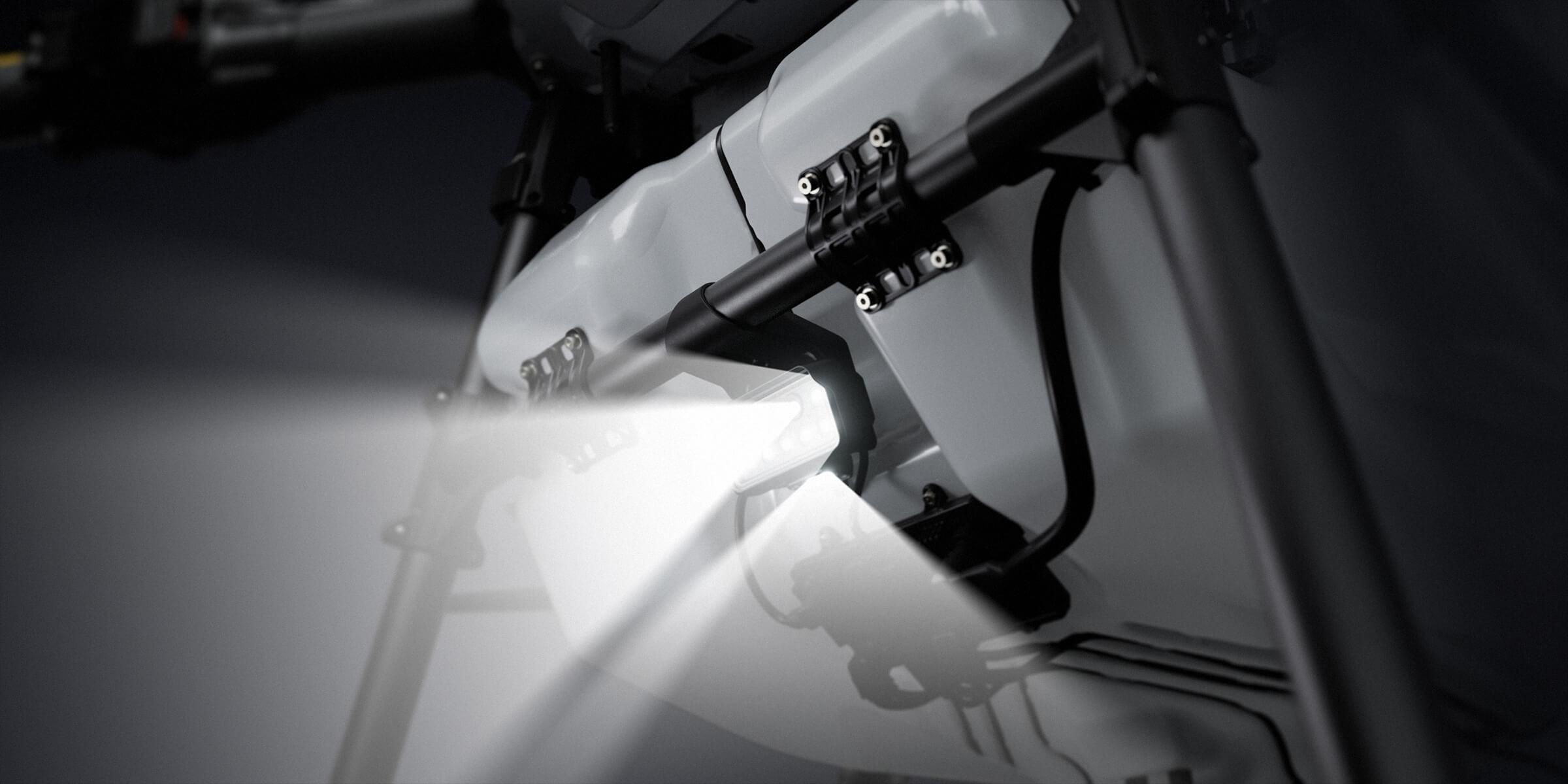
In addition to the existing low beam lights, new front-facing high beams and downward supplemental lighting have been added, ensuring safer nighttime operations.
Smarter Obstacle Bypassing
- Obstacle Type Detection
- Automatic Obstacle Position Memory
- Terrain Following Without Mapping
The system can detect various obstacle types, including wires[29], poles, high-voltage towers, and trees. It intelligently selects the optimal path, ensuring smooth and seamless bypassing around obstacles.
The system automatically remembers obstacle locations, enabling more precise bypassing during subsequent flights. Users can save obstacles to a field with a single click, increasing safety with every flight.
The system can achieve Terrain Following of slopes up to 90° without prior mapping. It also supports intelligent obstacle bypassing[2], addressing the operational requirements of most mountainous and orchard environments with efficiency and precision.
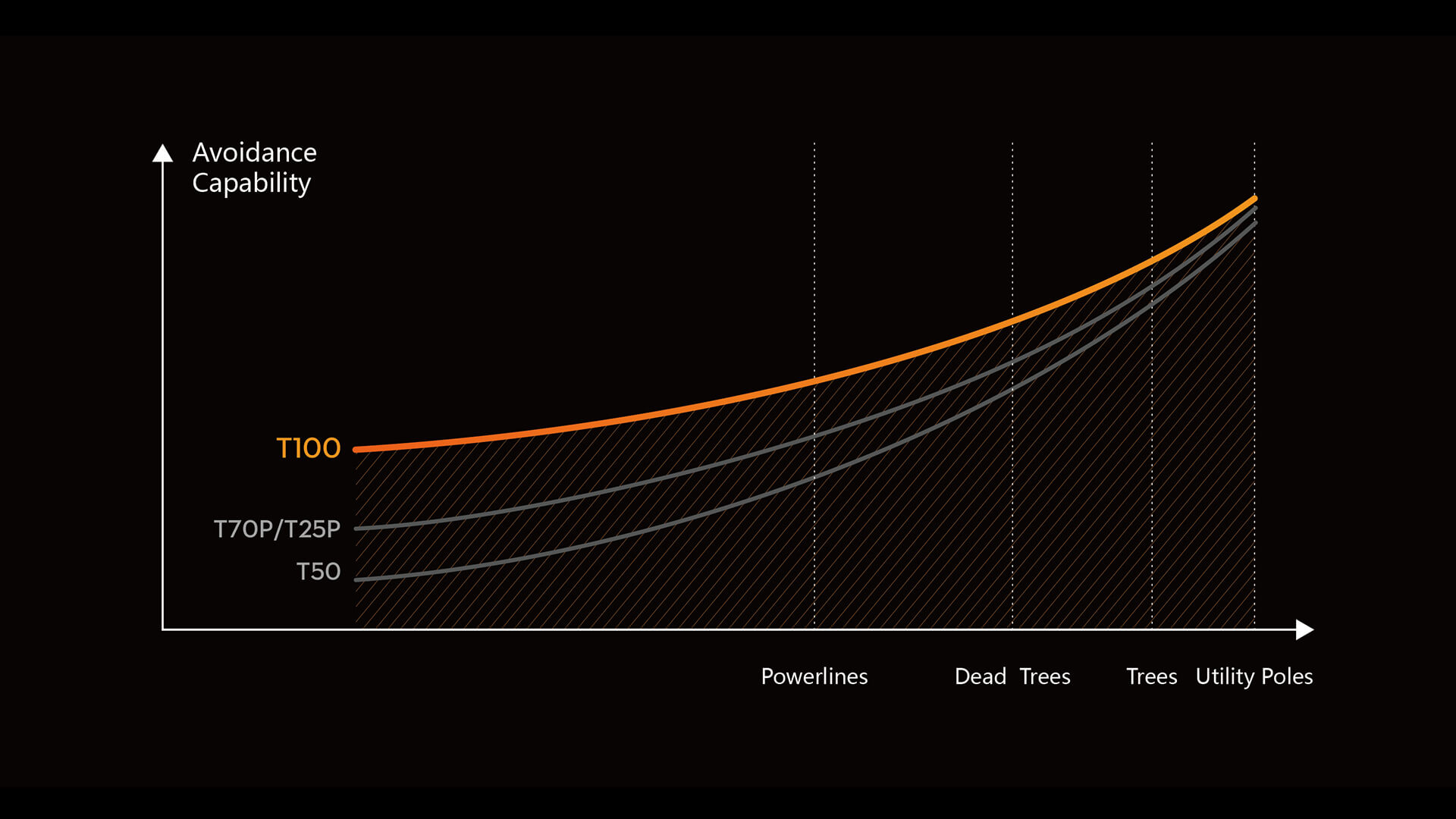
Enhanced Obstacle Avoidance Capabilities
With advanced multi-sensor fusion and upgraded algorithms, the T100 achieves a higher success rate in avoiding various obstacles. Its precision in detecting smaller obstacles is significantly improved, ensuring safer and more reliable operations.
Lift System
Your Transport Assistant
The T100 transforms into a transport solution. With a lifting maximum capacity of 100 kg. Features like auto balance control , weight detection, and automatic navigation to loading and unloading points make it adaptable to various agricultural transport scenarios.
Solar Panels
Fruits
Building Materials
Saplings
Propulsion System
Powerful, Efficient, Reliable
Under High Temperatures
The coaxial dual-rotor design, paired with carbon fiber propellers, delivers a comprehensive upgrade in performance, efficiency, and safety redundancy.
Coaxial Dual-Rotor
Powerful
Performance
82 kg Single-Axis Max Thrust
20 m/s Max Speed
Compact Size, High Load Capacity
Energy
Efficiency
39% Increase in Full-Load Power Efficiency
Safety
Redundancy
Propeller Stop Protection
Low battery performance under heavy load
Efficient
Operations
Increase in Spray Width
Increase in Operation Speed
Enhanced Penetration for Orchards
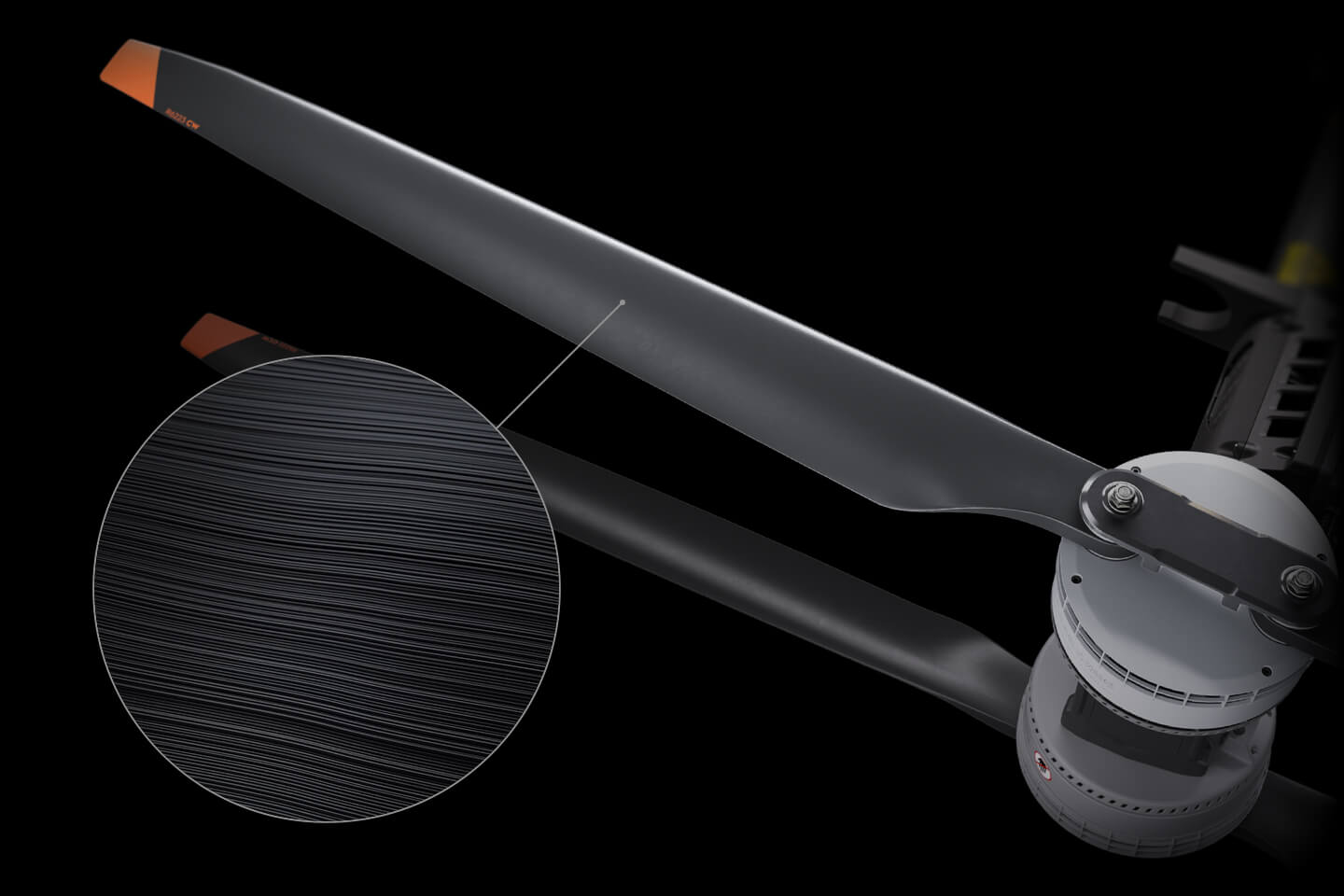
62-Inch Carbon Fiber Propellers
Carbon fiber propellers offer greater rigidity and lighter weight, resisting deformation even at high temperatures. With optimized airfoil and increased diameter, efficiency is improved by 32%.
Motors and ESCs
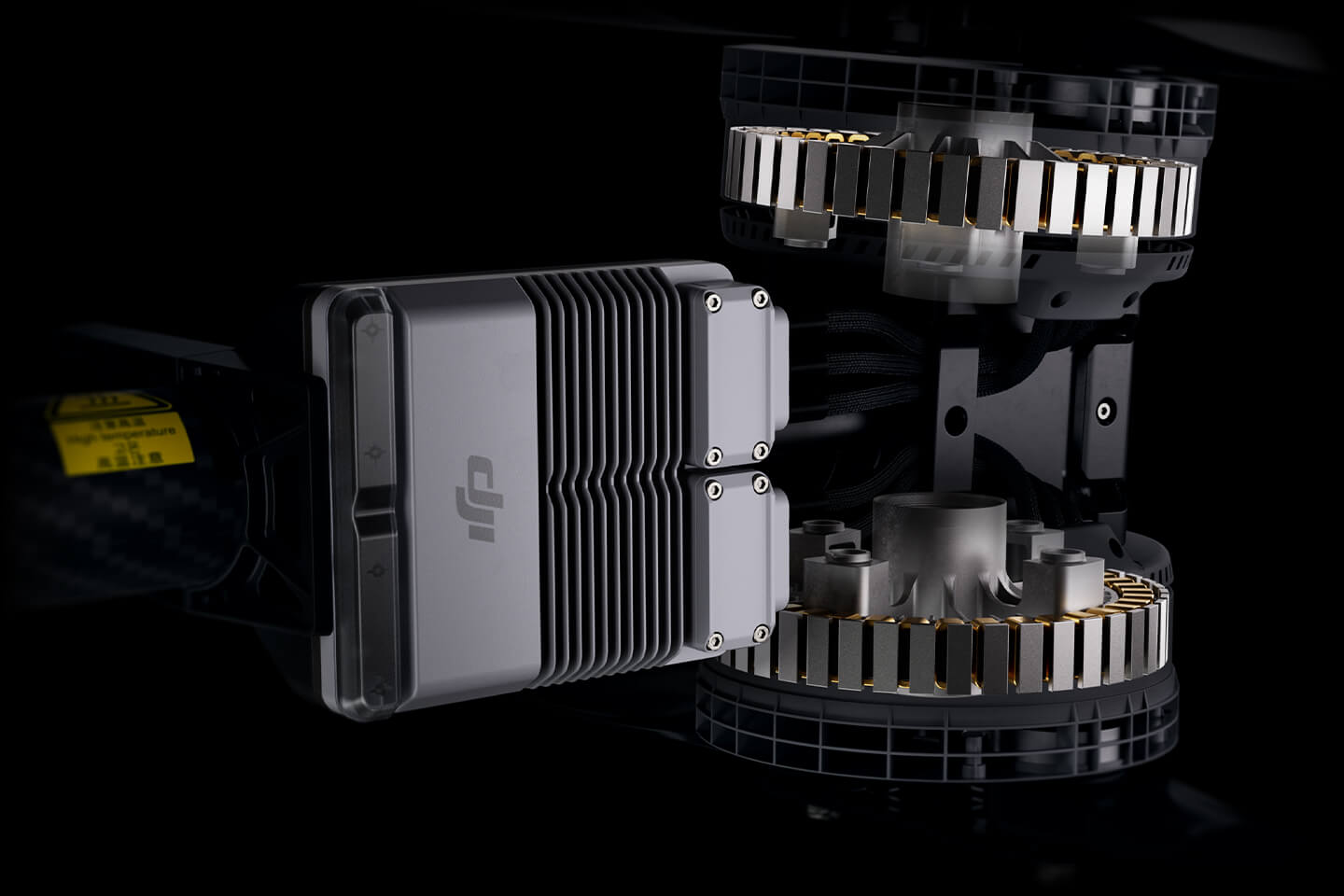
Larger motors, more torque. 420A electronic speed controllers ensure stable and reliable operation, delivering faster response times.
DJI RC Plus
Easy Control for New and
Experienced Pilots
DJI RC Plus features a 7-inch high-brightness screen that is 16% brighter for clear visibility under sunlight. Both internal and external battery life are extended by 30 minutes. New backlit buttons enhance nighttime operation, and customizable physical buttons offer flexible control.
Rigorous Testing Standards
The T100 has undergone 700 hours of reliability testing, including real-flight aging, accelerated component fatigue, and extreme temperature evaluations. These ensure stability and reliability, delivering unmatched performance under various conditions.
Transmission System
Seamless Signal
Stability
The upgraded O4 video transmission algorithm ensures constant signal availabilitys. O4 Relay it's designed to excel in challenging signal conditions, delivering seamless and efficient operations.
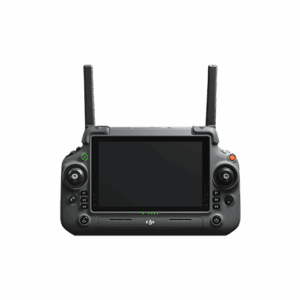
O4 Transmission
An upgraded transmission algorithm enhances the range while maintaining smooth and stable visuals for consistent performance.
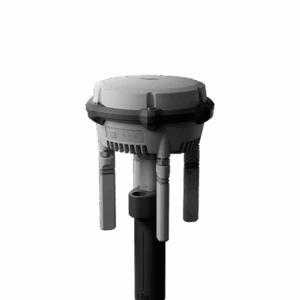
D-RTK 3 AG (Optional)
Enabling plug-and-play centimeter-level positioning without the need to configure coordinates. It ensures precision across the entire operation.
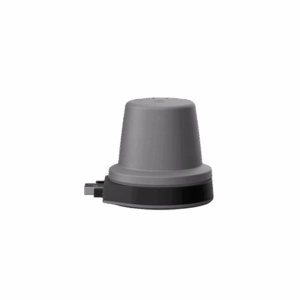
RTK High-Precision Positioning Module
Use in conjunction with the remote controller and smartphone for precise location marking.
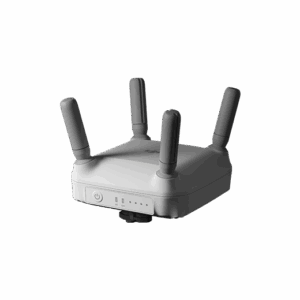
O4 Relay (Optional)
A Relay can ensure smooth operations in scenarios that have signal interference.
Power System
Ultra-Fast Charging, Energy-
Efficient Design
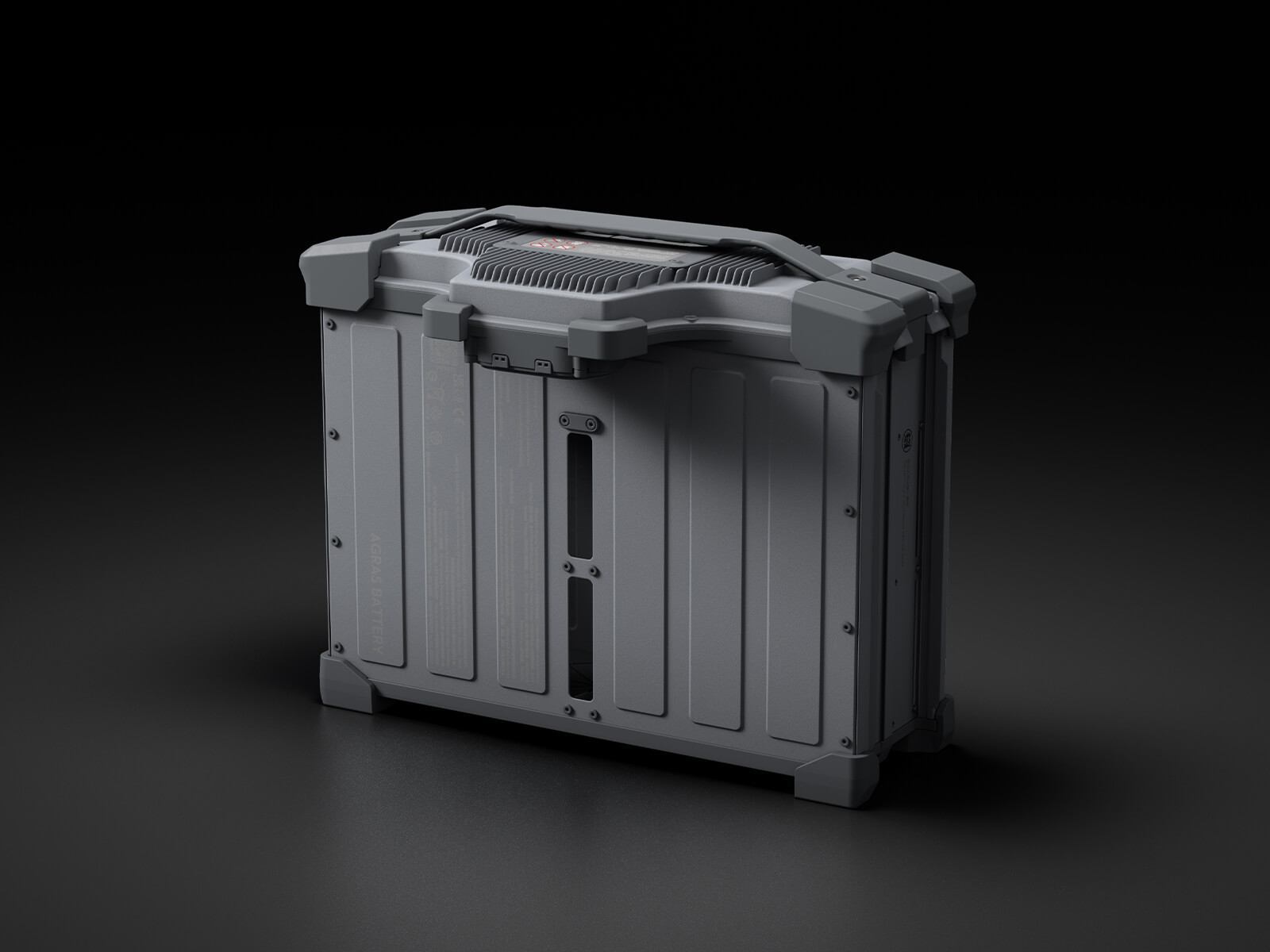
The DB2160 Intelligent Flight Battery has an increased capacity and lighter built, offering ultra fast charging while reducing fuel consumption. Its innovative triple air-channel cooling system disperses heat through airflow, ensuring safe and stable energy management with efficient cooling even during flight.
DB2160 Intelligent Flight Battery
41 Ah
1500 charge cycles under warranty
500 A high-power connector
Weight: 14.7 kg
Ergonomic handle
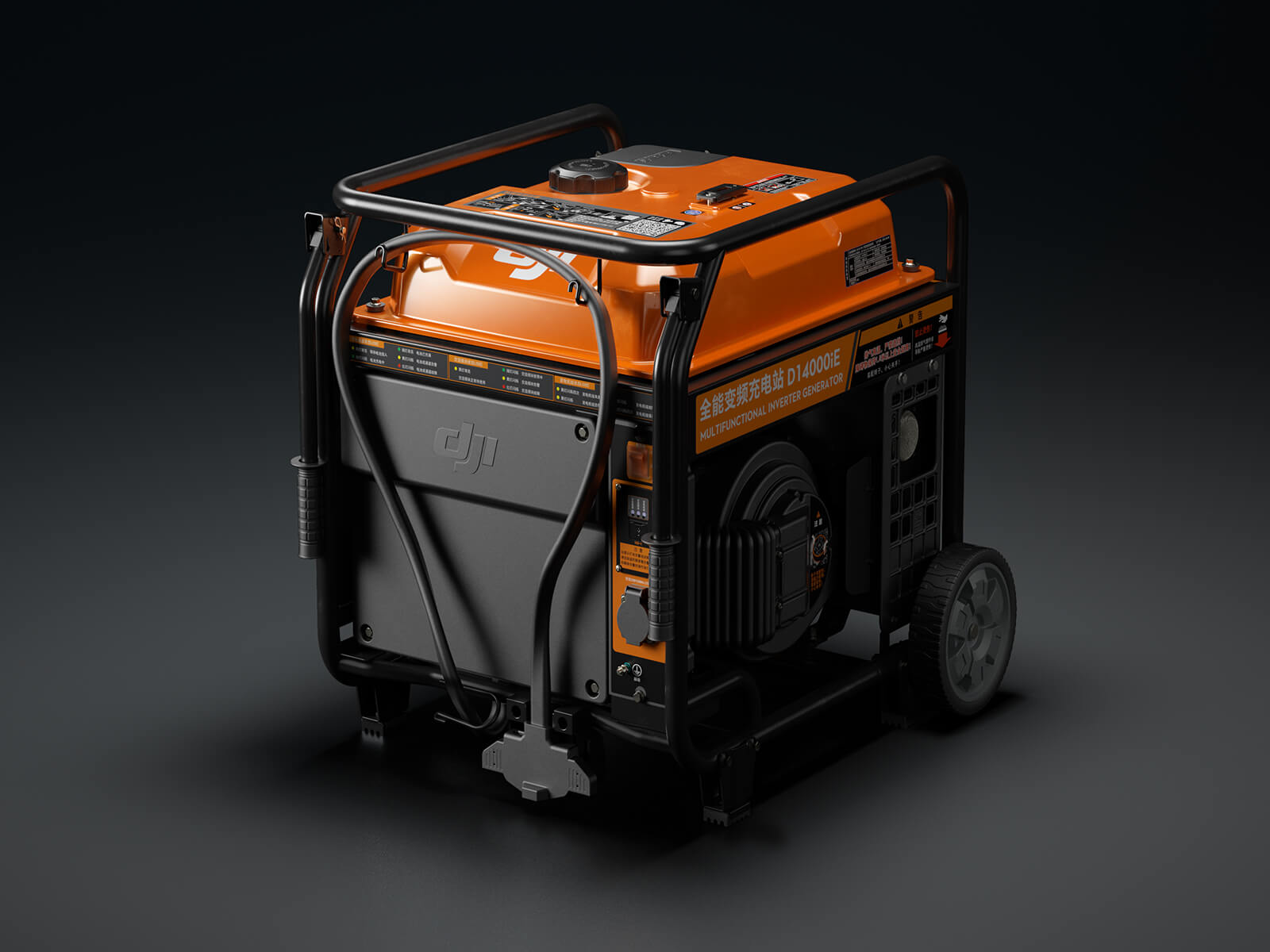
D14000iE Multifunctional Inverter Generator
11500 W fast charging[20]
1500 W AC output
1.8 m charging cable
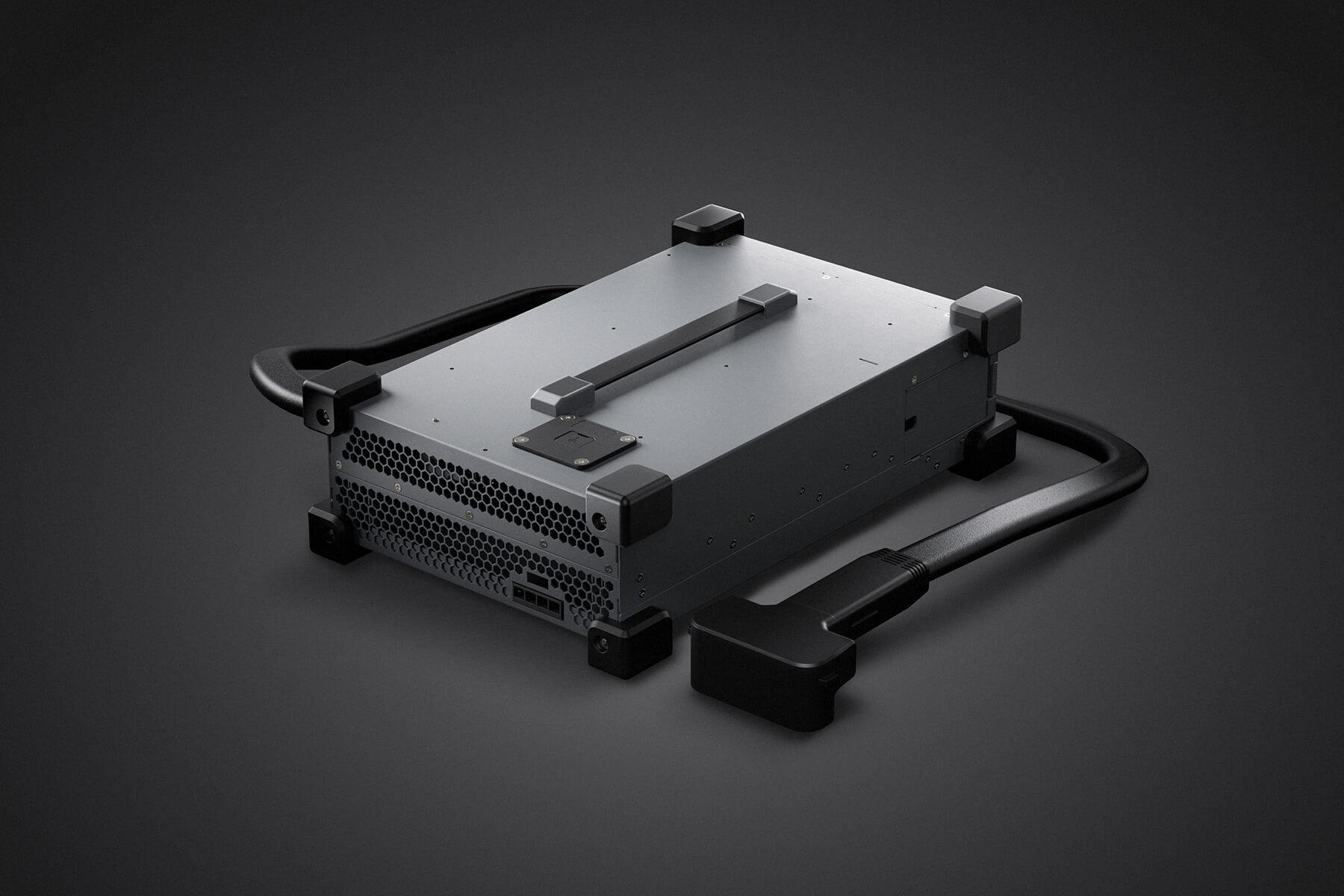
C10000 Intelligent Power Supply
Single-phase power input
9000 W fast charging
Adaptive power protection
1.5 m charging cable
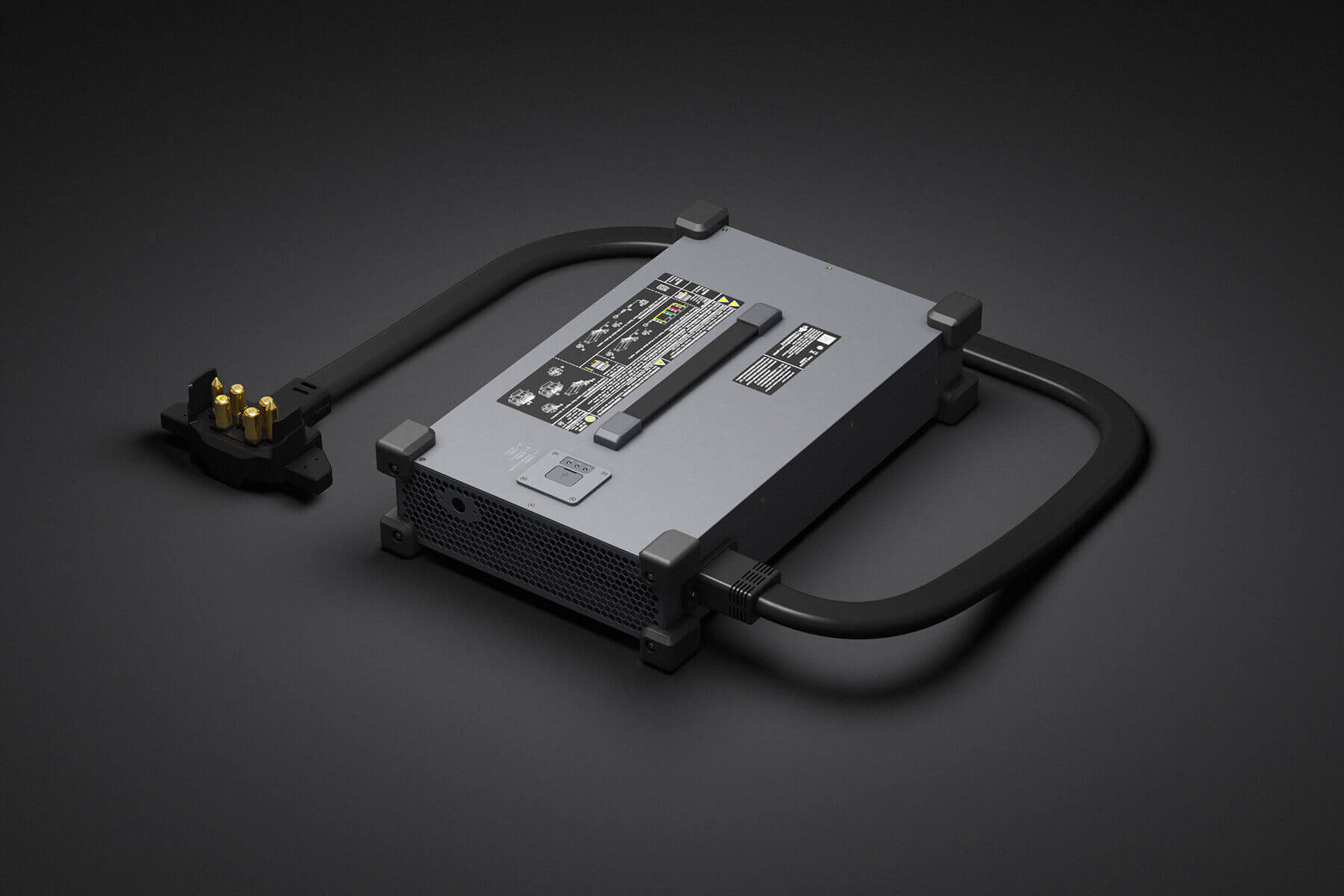
C12000 Intelligent Power Supply
Tri-phase power input
12000 W fast charging
Adaptive power protection
1.8 m charging cable
Find the Right Drone for Your Operation
Compare Agras models, features, and capabilities to see which best fits your needs.
Get In Touch
Have a question? Ready to schedule a demo or get a quote?
We’re here to help! Reach out to us today.
Specs
Weight
Weight for spraying: 75 kg (standard with 2 nozzles)
Weight for spraying: 77 kg (optional with 4 nozzles)
Weight for spreading: 75 kg (equipped with spreading system)
Weight for lifting: 65 kg (equipped with lifting system)
Weight for lifting: 90 kg (equipped with dual-battery lifting system)
Max Takeoff Weight [1]
Max takeoff weight for spraying: 175 kg (standard with 2 nozzles)
Max takeoff weight for spraying: 177 kg (optional with 4 nozzles)
Max takeoff weight for spreading: 175 kg (equipped with spreading system)
Max takeoff weight for lifting: 165 kg (equipped with lifting system)
Max takeoff weight for lifting: 170 kg (equipped with dual-battery lifting system)
Max Diagonal Wheelbase
2330 mm (diagonal)
Dimensions
3220 mm × 3224 mm × 975 mm (arms and propellers unfolded)
1820 mm × 1840 mm × 975 mm (arms unfolded and propellers folded)
1105 mm × 1265 mm × 975 mm (arms and propellers folded)
Hovering Accuracy Range (with strong GNSS signal)
RTK Enabled: ±10 cm (horizontal), ±10 cm (vertical)
RTK not enabled: Horizontal ±0.6 m, vertical ±0.3 m
Max Configurable Flight Radius
2 km
Operating Temperature
0 °C to 40 °C
Max Wind Resistance
<6 m/s
Stator Size
155 × 16 mm
KV
60 rpm/V
Material
Carbon Fiber Composite
Dimensions
62 inches
Quantity
8 pairs
Model
LS100
Dimensions
880 mm × 870 mm × 810 mm (spray rod folded)
1020 mm × 1930 mm × 810 mm (spray rod unfolded)
Material
HDPE
Volume
100 L
Operating Payload [1]
100 kg
Model
LX07550SX (Standard Nozzle) / LX09550SX (Optional Mist Nozzle)
Quantity
2 (Standard) / 4 (Optional)
Nozzle Distance
1834 mm (Two Nozzles / Four Nozzles Outermost)
Droplet Size
50 – 500 μm
Effective Spray Width [2]
5 – 13 m
Type
Impeller Pump (Magnetic Drive)
Quantity
2
Max Flow Rate
30 L/min (Standard 2 nozzles), 40 L/min (Optional 4 nozzles)
Dimensions
900 mm × 820 mm × 920 mm
Compatible Material Diameter
Standard configuration:
Extra-large auger: 0.5 mm – 10 mm granules (fertilizer, wheat, feed, etc.)
Medium auger: 4 mm – 6 mm granules (rice)
Optional:
Large auger: 4 mm – 10 mm granules (rice, fertilizer)
Small auger: 0.5 mm – 4 mm granules (rapeseed, granular herbicides, granular insecticides)
Spreading Tank Volume
150 L
Spreader Structure Type
Centrifugal Disc
Discharge Structure Type
Screw Feeder Feeding
Max Discharge Rate
400 kg/min (compound fertilizer)
Max Load Inside the Spreading Operation Box
100 kg
Effective Spreading Width [3]
3 – 10 m
Dimensions
Standard payload: 805 mm × 764 mm × 669 mm
Load Capacity [4]
100 kg
Lifting Cable Length
10 m (standard configuration)
Recommended Cable Length
10 – 15 m
Operating Temperature
0 °C to 40 °C
Dimensions
805 mm × 960 mm × 669 mm
Load Capacity [4]
80 kg
Lifting Cable Length
10 m (standard configuration)
Emergency Escape Mode
Cable Fuse Disconnection and Escape
Recommended Cable Length
10 – 15 m
Operating Temperature
0 °C to 40 °C
Millimeter Wave Radar EIRP
< 20 dBm (NCC / MIC / KC / CE / FCC)
Operating Temperature
0 °C to 40 °C
Operating Environment Requirements
Adequate light and discernible surroundings
Field of View (FOV)
Laser radar: Vertical 272°, Horizontal 60°
Front Radar: Horizontal 360°, Vertical ±45°
Downward Radar: Left and Right ±12.5°, Front and Back ±22.5°
Rear Radar: Left and Right ±45°, Front and Back ±45°
Quad vision system: Horizontal 360°, Vertical 180°
FPV camera: Horizontal ±86°, Vertical 108°
Measurement Range [4]
≤ 60 m
Effective Safe Obstacle Avoidance Speed [5]
≤ 13.8 m/s
Effective Obstacle Avoidance Height
≥ 1.5 m
Model
TKPL 2
Screen
7-inch LCD touchscreen; resolution: 1920 × 1200; brightness: 1400 cd/m²
Storage Temperature Range
Less than one month: -30° to 45° C (-22° to 113° F)
One to three months: -30° to 35° C (-22° to 95° F)
Three months to one year: -30° to 30° C (-22° to 86° F)
Charging Temperature
5° to 40° C (41° to 104° F)
Internal Battery Runtime
3.8 hours
External Battery Runtime
3.2 hours
Charging Type
Use a USB-C fast charger with a maximum power of 65 W (maximum voltage 20 V), and it is recommended to use the DJI Portable Charger.
Charging Time
2 hours for internal battery or internal and external battery (when remote controller is powered off and using a standard DJI charger)
Weight [1]
14.7 ± 0.3 kg
Capacity
41,000 mAh
Nominal Voltage
52 V
Charger Model
CSX901-12000
Dimensions
456 mm × 291 mm × 107 mm
Weight [1]
13.13 kg
Input Voltage
Three-phase AC input: 175 – 520 V
Single-phase AC input: 200 – 264 V
Output Voltage
62 V
Rated Output Current
194 A
Rated Power
12000 W (three-phase 380 V input)
3000 W (single-phase 220 V input)
Recharge Time [6]
8 – 9 minutes (DB2160 Intelligent Flight Battery, 30% – 95% charge)
Protection Functions
Over-temperature, over-voltage, under-voltage, short circuit, fan stall, and other protection functions
Operating Temperature
0° to 40° C
Output Channels
1
Compatible with Intelligent Flight Battery
DB1580 / DB2160 Intelligent Flight Battery
Dimensions
112 mm × 112 mm × 51 mm (no antenna)
120 mm × 112 mm × 101 mm (with antenna)
Weight [1]
630 g
Input
2.7 V – 24 V
Power Consumption
10.48 W (FCC), 8.8 W (SRRC)
Battery Capacity
6500 mAh
Operating Time
5 hours
Operating Frequency
2.4000 – 2.4835 GHz, 5.150 – 5.250 GHz, 5.725 – 5.850 GHz
Effective Signal Range
5 km (SRRC), 4 km (MIC/KCC/CE), 8 km (FCC)
(In an interference-free, unobstructed environment, flight altitude 2.5 m)
Charging Time
2.5 hours (30 W recharge)
Ingress Protection Rating
IP55
Supports Satellite Systems
GPS: L1/L2/L5
BeiDou: B1I/B2I/B3I/B1C/B2A/B2B
Galileo: E1/E5a/E5b/E6
GLONASS: G1/G2
QZSS: L1CA/L2C/L5
L-BAND
Dimensions
345 mm × 244 mm × 300 mm
Weight [1]
3.77 kg (including packaging)
Power Consumption
7 W
Battery Capacity
6500 mAh
Operating Time
7 hours
Operating Frequency
Broadcast Mode: O4: 2.4G/5.8G
Relay Mode: Not Supported
Effective Signal Range
FCC: 15 km
SRRC: 12 km
CE/JP: 8 km
Charging Time
2.5 hours (30 W recharge)
Ingress Protection Rating
IP67
Positioning Accuracy [7]
PPP Satellite-Based Service Accuracy:
Convergence Time: 20 mins
Horizontal: 30 cm (RMS)
Elevation: 40 cm (RMS)
Network RTK Calibration:
Horizontal: 0.8 cm + 1 ppm (RMS)
Vertical: 1.5 cm + 1 ppm (RMS)
1 ppm: Accuracy decreases by 1 mm for every 1 km increase in distance between the aircraft and the base station. For example, if the aircraft is 1 km away from the base station, the accuracy is 1.1 cm.
[2] The effective spray width of the spraying system depends on the actual working scene.
[3] Working height is 3 m, disc rotation speed is 1100 rpm, uniformity requirement (CV<30%) measured broadcast width is 10 m. The faster the disc rotation speed, the higher the flight altitude, the larger the broadcast width.
[4] Includes the weight of ropes and hooks. Measured at sea level, the DJI Agriculture App will intelligently recommend the loading weight based on the current state of the aircraft, environmental conditions, and operational tasks. The maximum weight of the loaded material should not exceed the recommended value, as it may affect flight safety.
[5] The effective working range of sensing distance, obstacle avoidance, and bypassing capabilities may vary due to different environmental lighting, rain, fog, and the material, location, and shape of the subject object. The downward sensing is used to assist in terrain-following altitude flight, while sensing in other directions is used for obstacle avoidance. Except for scenes without linear obstacles, if a collision occurs at speeds up to 13.8 m/s resulting in aircraft damage, responsibility can be determined through log analysis, and the aircraft may be eligible for free warranty if non-human causes are identified. If there are linear obstacles like wires or guy wires on power poles, please mark them as obstacles; otherwise, failure to bypass them will be the customer’s responsibility.
Note:1. The downward perception is used to assist terrain-following altitude flight. If a collision with an obstacle occurs below, it is considered the customer’s responsibility.2. Due to the performance limitations of the safety system, the aircraft cannot actively avoid moving objects. Accidents in such scenes are considered the customer’s responsibility.
[6] Sea level height, environmental temperature between 15-40 degrees Celsius, time to charge the battery from 30% to 95%; fast charging is supported when the battery cell temperature is within the range of 15-75 degrees Celsius; charging time varies depending on input power, ASL, initial charge level, and other factors.
[7] Positioning accuracy and reliability are affected by various factors, including equipment tilt, signal obstruction, multipath, number of satellites, geometric distribution, and atmospheric conditions. It is recommended to set up the equipment in open scenes, away from electromagnetic interference and multipath environments.